At several points in You Can See Everything, I caught myself thinking that, had this been fiction, I’d have accused the writer of laying it on a bit thick.
Reality is under no obligation to be plausible. Whether we’re any good at interpreting it is another matter.
Thirty-four days before beginning her prison sentence, disgraced Theranos founder Elizabeth Holmes allows filmmakers Lance Oppenheim and Nathan Fielder into her home. Convicted of defrauding investors, she’s preparing to leave behind her husband, Billy Evans, and their two young children. She apparently hopes the documentary will reveal a side of her the public has never seen. What follows is uncomfortably hilarious, increasingly disquieting and, ultimately, magnificent.
Holmes insists she has never lied. Not about Theranos, not about anything. Fielder asks whether she’s ever told even a harmless white lie. Eventually she admits to inventing an excuse to dodge a social engagement, then explains why that doesn’t count. It’s wonderfully absurd, though whether she believes what she’s saying is impossible to determine.
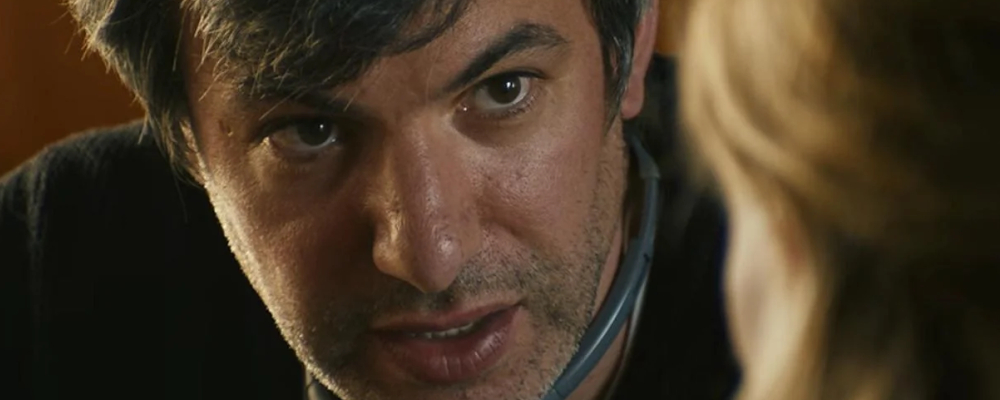
Fielder is a curious presence. First glimpsed outside, bathed in sickly yellow light while Holmes and Evans chat indoors, he looks almost like an intruder in his own documentary. His habitual earphones reinforce the impression: he’s both participating and observing from a distance. His deadpan borders on the dour, making his flashes of incredulity all the funnier.
He introduces Holmes to Abbott and Costello’s Who’s on First?, a routine in which two people appear to be having the same conversation while understanding entirely different things. She laughs but can’t explain the joke. The comparison is so absurdly apt that reality seems to have joined one of Fielder’s elaborate pranks. Is Holmes genuinely this naïve, or has seeming incomprehension become a useful defence? And what of Fielder, whose own apparent naïveté is frequently a performance?
Holmes is evasive, sometimes maddeningly so, but also a mother facing separation from her children. Her distress may be entirely sincere. That doesn’t make her account truthful. Genuine emotion and profound dishonesty are perfectly capable of coexisting.
Evans is equally perplexing. He claims they never argue, then casually takes over while Holmes is whisking eggs. That’s not a contradiction; it might explain the absence of arguments. Is he controlling, or is she content to defer? Perhaps he’s just helping with breakfast.
Elsewhere, Evans is filmed stark naked in the shower, a startling display of what he calls radical transparency. Yet the more of him we see, the less certain we are what motivates him. The husband who champions openness remains thoroughly opaque.
Holmes’s parents, meanwhile, seem disarmingly ordinary: affectionate, worried and understandably distressed. Her father, Christian Holmes IV, once worked for Enron. Of course he did. When Fielder attempts to question her father, Evans plays interference, clearly anxious. Whether that’s protectiveness or control remains unclear.
The filmmaking is deceptively unobtrusive. David Bolen’s naturalistic cinematography and boxy 4:3 framing give the domestic interiors the claustrophobia of a psychological chamber drama. The camera holds on faces long enough for us to start inventing motives for every twitch. Yet expressions are ambiguous, and we bring our own suspicions to every close-up.
There’s no authoritative voiceover, no procession of experts, no convenient archival cutaways exposing each contradiction. But the absence of a narrator hardly means the absence of a point of view. Adam Locke-Norton’s editing finds comedy and unease in a glance or hesitation, while Ari Balouzian’s eerie score makes ordinary conversations feel like scenes from a psychological thriller. The music often seems to know something we don’t. The film appears almost uncrafted, as though events are simply unfolding, when its construction is impeccable.
Things become considerably stranger. Fielder persuades Holmes to watch Amanda Seyfried’s portrayal of her in The Dropout, which she’s apparently avoided. Holmes insists money doesn’t matter to her, a claim that becomes particularly interesting when confronted with a dramatisation so concerned with her ambition. Her distress mounts until she asks Fielder to turn it off.
It’s an extraordinary encounter between a woman and her fictional counterpart. Holmes may reject the portrayal, but it’s acquired a life of its own, shaping perceptions of her and, by her account, affecting her actual life. Her anguish seems genuine, even if we doubt her explanations for the events depicted. Having spent years cultivating her public image, she’s now confronted by one she cannot control. Yet isn’t she risking precisely the same thing by participating in another film? The relationship between reality and dramatisation becomes more complicated still. I’ll say no more.
Increasingly, the scrutiny turns on Fielder himself. A man accustomed to probing other people’s behaviour finds his own assumptions, memories and emotions becoming unreliable. Is he observing manipulation or participating in it? Has he mistaken sympathy for understanding? Can he be certain of his own motives?
There’s an ethical hazard. Holmes’s victims remain largely outside the frame, while we spend hours considering her feelings. Her motives may be elusive, but the facts of her conviction aren’t. Understanding someone doesn’t mean excusing them.
And there’s a parallel with Theranos itself. Holmes promised to extract remarkable quantities of information from a tiny sample of blood. Here, cameras record hours of faces, gestures and conversations in pursuit of another elusive truth. We watch for the twitch, the hesitation, the incriminating look. But seeing more doesn’t mean knowing more. Sometimes it just gives us more to misinterpret.
At nearly three hours, You Can See Everything is utterly absorbing: a psychological thriller, a comedy of miscommunication and, occasionally, an unexpectedly moving family drama. I found it exhilarating, unsettling and impossible to shake.
The title comes from Holmes herself: an invitation to see everything. Fair enough. Understanding what the hell we’re looking at is another matter.
